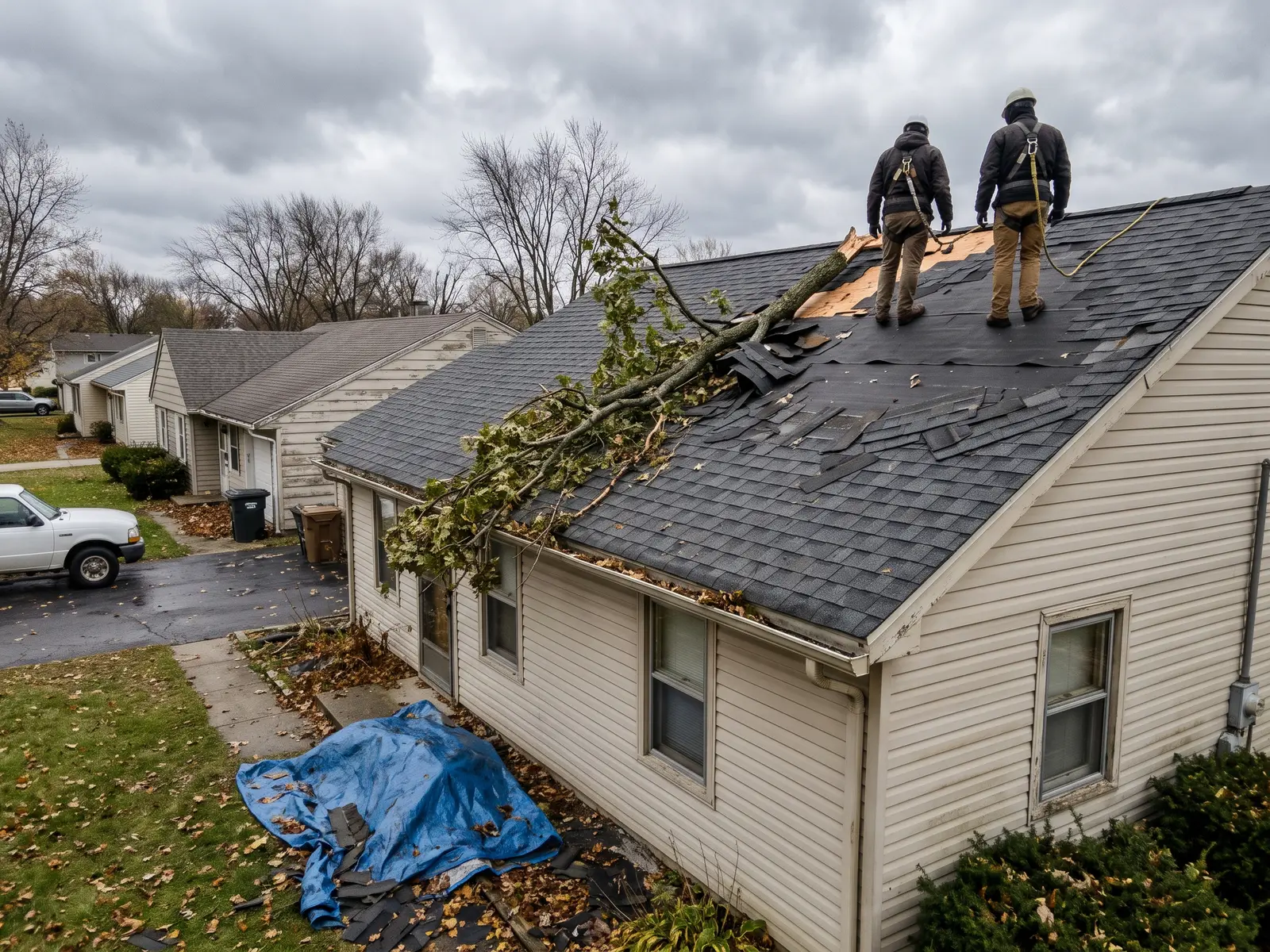
Storm & Hail Damage Roof Repair in Fort Wayne
Hail and spring windstorms are the most common reasons Fort Wayne roofs get replaced early. We inspect the roof, photograph every bit of damage for your insurer, tarp anything that's leaking, and give you a written repair or replacement price. No door-knocking, no pressure to sign on the spot.
- Free inspection with dated photos
- Emergency tarping when weather allows
- Itemized written quote for your adjuster
- Honest advice if damage is too minor to claim
Get a Free Quote
Fast. Easy. No obligation.
Quick answer
After hail or high wind in Fort Wayne, storm damage repair can run from about $400 for a few shingles to $18,000 for a full replacement. If the damage is from a covered storm, homeowners insurance often pays the cost minus your deductible. Get a free inspection with photos first, then call your insurer to open a claim.
How do I know if hail damaged my roof?
Hail damage isn't always visible from the ground. Signs on the roof and around the house:
- Bruises or soft spots on shingles where the granules were knocked loose, often dark circles.
- Heavy granules washing out of the downspouts after the storm.
- Dents in gutters, downspouts, vents and window wraps. Metal shows hail hits clearly.
- Cracked or split shingles, especially on older roofs.
- Damaged siding, screens or a dented car from the same storm.
Wind damage looks different: lifted, creased or missing shingles, often along the edges and ridge. Lifted shingles that didn't blow off can lose their seal and leak months later. A free roof inspection documents all of it with photos.
How does a hail damage insurance claim work?
- Get the roof inspected and photographed. Knowing what's there before you call helps you decide whether to file.
- Check your policy and deductible. Many policies have a separate wind and hail deductible, sometimes a percentage of your home's insured value.
- File the claim with your insurer and note the storm date.
- Meet the adjuster. You can have us there to point out damage we documented.
- Review the adjuster's estimate. Compare it with our itemized quote; if items are missing, they can be submitted for review.
- Schedule the work. Insurers often pay in two parts: an initial payment, then the remainder once the work is done.
Our hail damage insurance claim guide walks through each step in more detail. You're always in charge of your claim; we provide the documentation and the written price.
Should I let a contractor cover my deductible?
No. Paying your deductible is your responsibility under your insurance policy. A contractor who offers to "cover," "waive" or "absorb" it is typically inflating the bill to the insurer to make up the difference, and that can be insurance fraud that puts you at risk too. Our quotes show the real price of the work, and you pay your deductible like your policy requires.
How do I avoid storm chasers?
After a big hail storm, out-of-state crews show up in Fort Wayne neighborhoods knocking on doors. Some do fine work; many are gone before the first warranty question. Protect yourself:
- Ask for a written, itemized contract. Indiana's Home Improvement Contracts Act requires a written contract for home improvement work over $150.
- Confirm the contractor will pull a permit with the Allen County Building Department, which requires one for roofing work. Indiana has no statewide roofer license, so the county permit is what puts the job on record.
- Never sign anything that assigns your insurance benefits to a contractor on the spot.
- Be wary of large up-front cash payments and pressure to "sign today before the adjuster comes."
- Ask for a local phone number and look up the business yourself.
Repair or full replacement after a storm?
Light wind damage to a younger roof is usually a repair: replace the damaged shingles, reseal the surrounding tabs and you're done. Widespread hail bruising across several slopes usually calls for a full shingle roof replacement, since matching patched areas on a damaged roof rarely works.
If you're replacing anyway, it's worth looking at impact-resistant shingles or metal roofing, and asking your insurer whether either changes your premium. Some policies treat cosmetic hail dents on metal differently, so ask about that too.
Our process
How storm & hail damage repair works with us
- 1
Call after the storm
Active leaks get priority. We tarp when it's safe to get on the roof.
- 2
Inspect and document
Dated photos of shingles, flashing, vents, gutters and soft metals on every slope.
- 3
You file the claim
We provide the photos and an itemized quote, and can meet your adjuster if you'd like.
- 4
Repair or replace
Work is scheduled once you approve, with the Allen County permit pulled for replacements.
Compare your options
Costs & planning
Related services
Storm & Hail Damage Repair questions
Will insurance pay for my roof after hail?
If a covered storm damaged it, your homeowners policy often pays to repair or replace it, minus your deductible. Coverage depends on your policy, so check your wind and hail deductible.
Will my insurance go up if I file a roof claim?
It can, depending on your insurer and claim history. That's one reason to get an inspection first: if damage is minor, paying for a repair yourself may make more sense.
How long do I have to file a hail claim?
It depends on your policy, and some limit how long after the storm you can file. Check your policy and file promptly.
Can insurance adjusters tell how old hail damage is?
Often, yes. Fresh hits show exposed asphalt and sharp edges; older damage weathers. Dated photos right after a storm help connect damage to the storm date.
Can a contractor pay my deductible?
No. Your deductible is your responsibility under your policy, and contractors who offer to waive it are usually inflating the claim, which can be insurance fraud.
Do you tarp roofs after storms?
Yes, when weather and safety allow. An emergency tarp keeps water out until permanent repairs are made.
Don't Wait for the Next Storm.
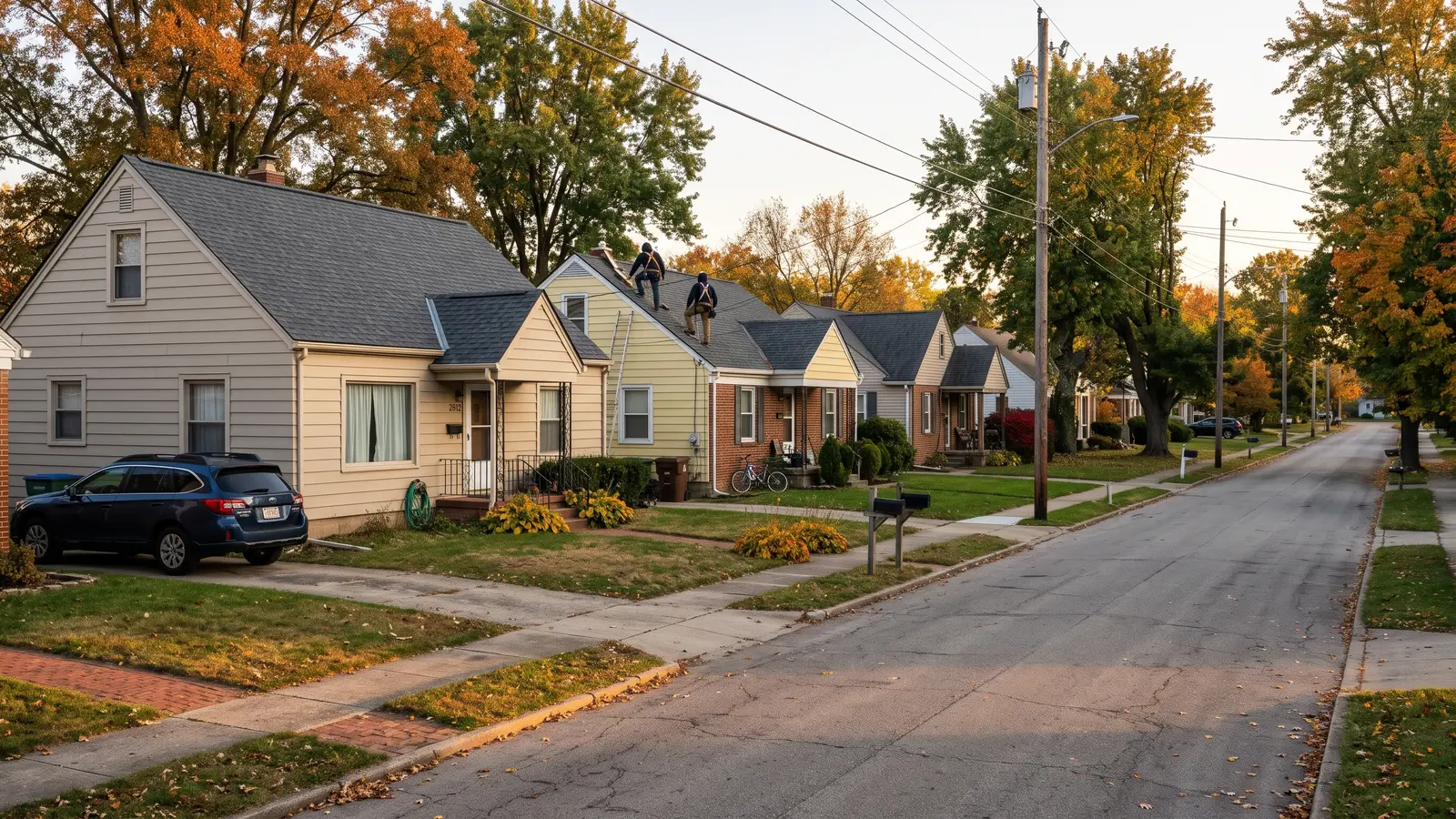
A worn roof only gets more expensive once water reaches the deck and ceiling. Get a free inspection and a written quote.
- Calls answered 24/7
- Free, written estimates
- Fort Wayne & nearby