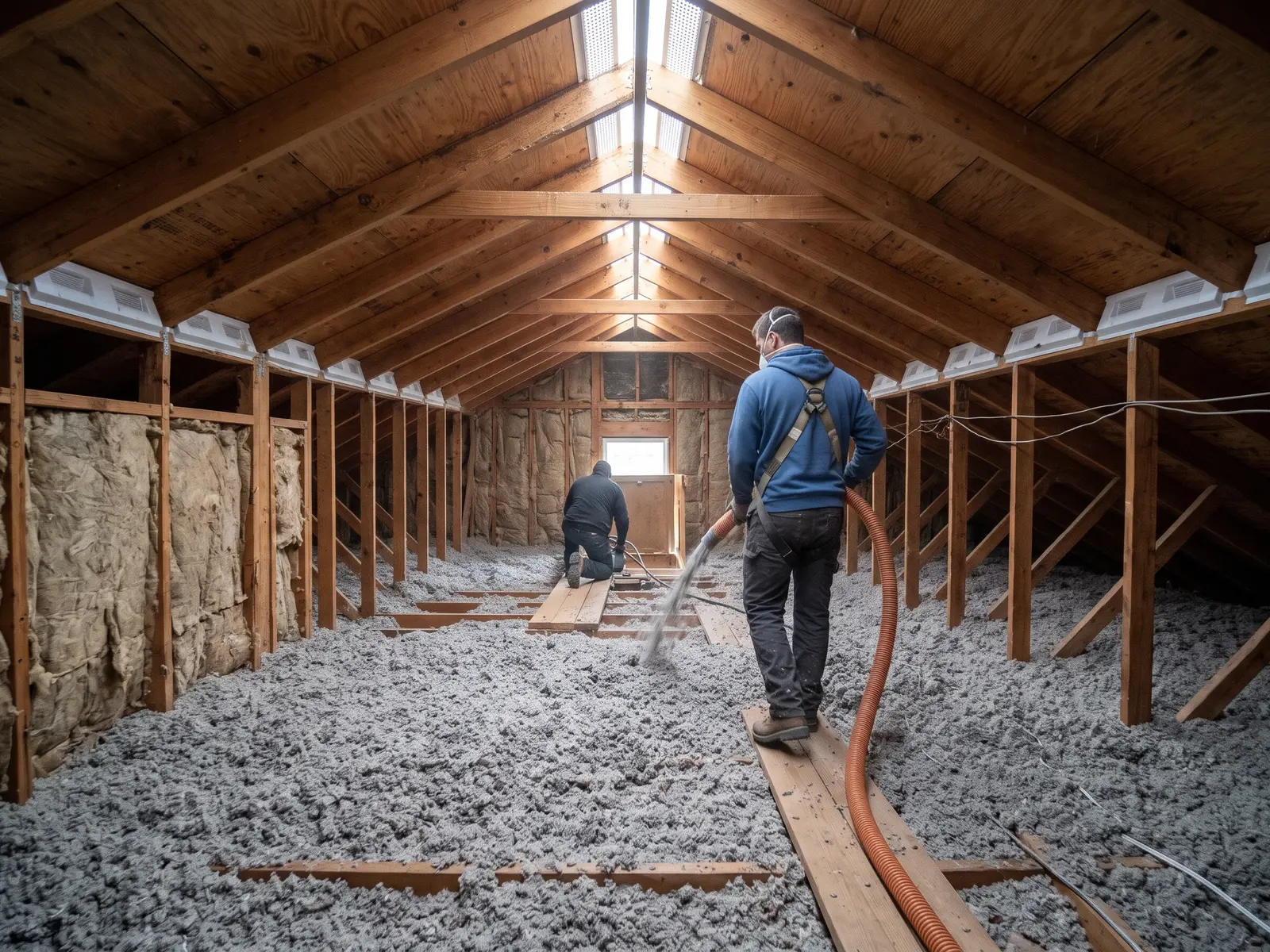
Attic Ventilation & Insulation in Fort Wayne
Your attic decides how long your roof lasts. A hot, poorly vented attic bakes shingles from below in July, and warm air leaking up in January melts snow into ice dams. We balance intake and exhaust vents, keep soffits open with baffles, seal the leaks from the house below, and bring insulation up to where it should be.
- Balanced intake and exhaust
- Baffles keep soffit vents open
- Air sealing before insulation
- Done with a new roof or on its own
Get a Free Quote
Fast. Easy. No obligation.
Quick answer
Fixing attic ventilation in a Fort Wayne home usually costs $800 to $4,000, depending on whether you need ridge vent, soffit intake, baffles, air sealing or added insulation. ENERGY STAR recommends R49 to R60 for attics in northern Indiana. Balanced ventilation and insulation are the main defense against ice dams and early shingle failure.
How much does attic ventilation and insulation cost in Fort Wayne?
Most projects fall between $800 and $4,000:
- Ventilation only. Adding ridge vent and opening or adding soffit intake is often at the low end, and cheapest when done during a roof replacement, since the ridge is already open.
- Baffles and air sealing. Rafter baffles at the eaves plus sealing gaps around light fixtures, plumbing stacks and the attic hatch.
- Insulation. Blowing in loose-fill to reach recommended levels is usually the largest line item in an older, under-insulated attic.
We check what you have first, so you're not paying for vents or insulation you don't need.
How much attic ventilation do you need?
The common building-code guideline is 1 square foot of net free vent area for every 150 square feet of attic floor, which can drop to 1 per 300 when the ventilation is balanced between low intake and high exhaust and the ceiling has a vapor retarder. Balance matters as much as the total:
- Intake at the soffits lets cool outside air in low.
- Exhaust at the ridge or high on the roof lets warm, moist air out.
Mixing exhaust types, like a ridge vent plus gable vents or powered fans, can short-circuit the airflow so the attic doesn't actually get ventilated. Many older Fort Wayne homes have a few box vents and painted-over or blocked soffits; many newer homes have plenty of exhaust but soffits stuffed with insulation.
Ventilation, insulation and ice dams
Ice dams are a heat problem. When warm air from the house leaks into the attic, it warms the roof deck, snow melts, runs down to the cold eaves and refreezes. The ice builds a ridge, water backs up behind it and gets under the shingles.
The fix works in three layers: air seal the gaps letting house air into the attic, insulate so less heat reaches the deck, and ventilate so the deck stays close to outdoor temperature. ENERGY STAR recommends R49 to R60 for attics in northern Indiana, and many older homes in the '07 District, South Wayne and Waynedale have a fraction of that. On a new roof we also install ice and water shield along the eaves as a backup. Ice-packed gutters are usually a symptom, not the cause.
How a hot attic shortens shingle life
On a sunny July afternoon an unvented attic can run far hotter than the outside air. That heat cooks shingles from below, drying the asphalt and speeding up curling and granule loss, and it pushes moisture into the decking. Many shingle manufacturers spell out ventilation requirements in their installation instructions for this reason.
If your roof is aging faster on some slopes than others, or you see dark, moldy sheathing in the attic, ventilation is often part of the story. Our guide on how long a roof lasts explains what else wears shingles out in northeast Indiana.
Should you fix ventilation with a new roof?
It's the best time. With the old shingles off, cutting in a continuous ridge vent and checking the soffit intake is simple, and we can confirm the new shingles are installed to the manufacturer's ventilation requirements. If your roof isn't due yet, ventilation and insulation can be done on their own, usually in a day. An inspection tells you which one you need.
Our process
How attic ventilation & insulation works with us
- 1
Attic check
Vent area, soffit intake, insulation depth, air leaks and signs of moisture.
- 2
Written plan
Vents, baffles, air sealing and insulation listed separately, only what's needed.
- 3
Ventilation
Ridge and soffit balanced, baffles installed to keep intake clear.
- 4
Seal and insulate
Air leaks sealed, then insulation brought up to the recommended level.
Compare your options
Costs & planning
Related services
Attic Ventilation & Insulation questions
How much does it cost to fix attic ventilation in Fort Wayne?
Most projects run $800–$4,000 depending on vents, baffles, air sealing and insulation. Adding ridge vent is cheapest during a roof replacement.
How much attic insulation do I need in Fort Wayne?
ENERGY STAR recommends R49 to R60 for attics in northern Indiana. That's roughly 16 to 20 inches of blown-in fiberglass or cellulose.
Do attic vents stop ice dams?
Ventilation helps, but air sealing and insulation do most of the work. Together they keep the roof deck cold so snow doesn't melt and refreeze at the eaves.
What is the 1/150 rule for attic ventilation?
A common code guideline: 1 square foot of net vent area per 150 square feet of attic floor, or 1 per 300 when ventilation is balanced between soffit intake and ridge exhaust.
Can I have a ridge vent and box vents together?
Mixing exhaust types can short-circuit airflow so the attic isn't properly ventilated. We usually recommend one exhaust type paired with good soffit intake.
Does poor ventilation void a shingle warranty?
Many manufacturers list ventilation requirements in their installation instructions and warranty terms, so check your shingle maker's documents. Proper ventilation is part of a correct install either way.
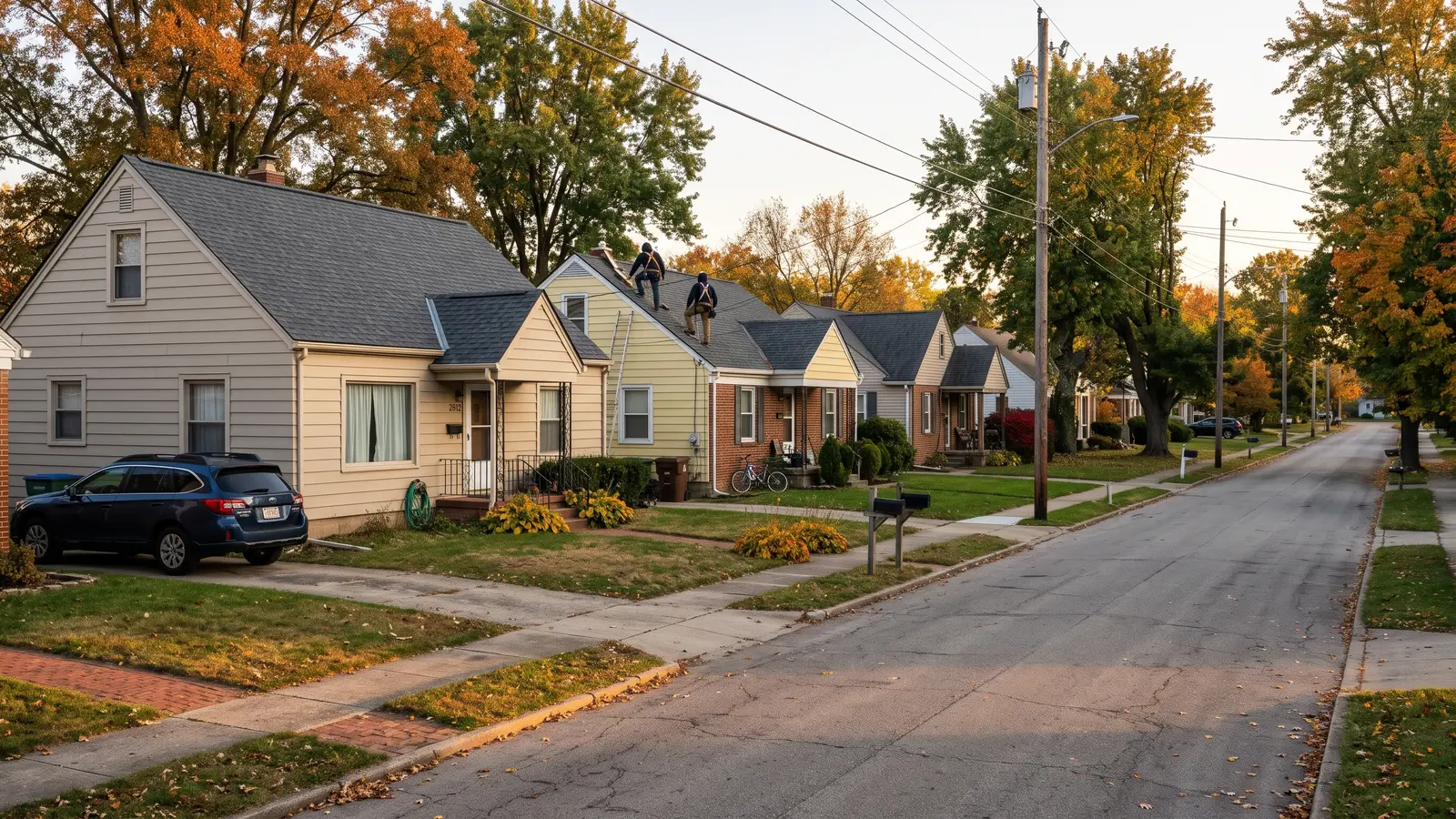
Don't Wait for the Next Storm.
A worn roof only gets more expensive once water reaches the deck and ceiling. Get a free inspection and a written quote.
- Calls answered 24/7
- Free, written estimates
- Fort Wayne & nearby