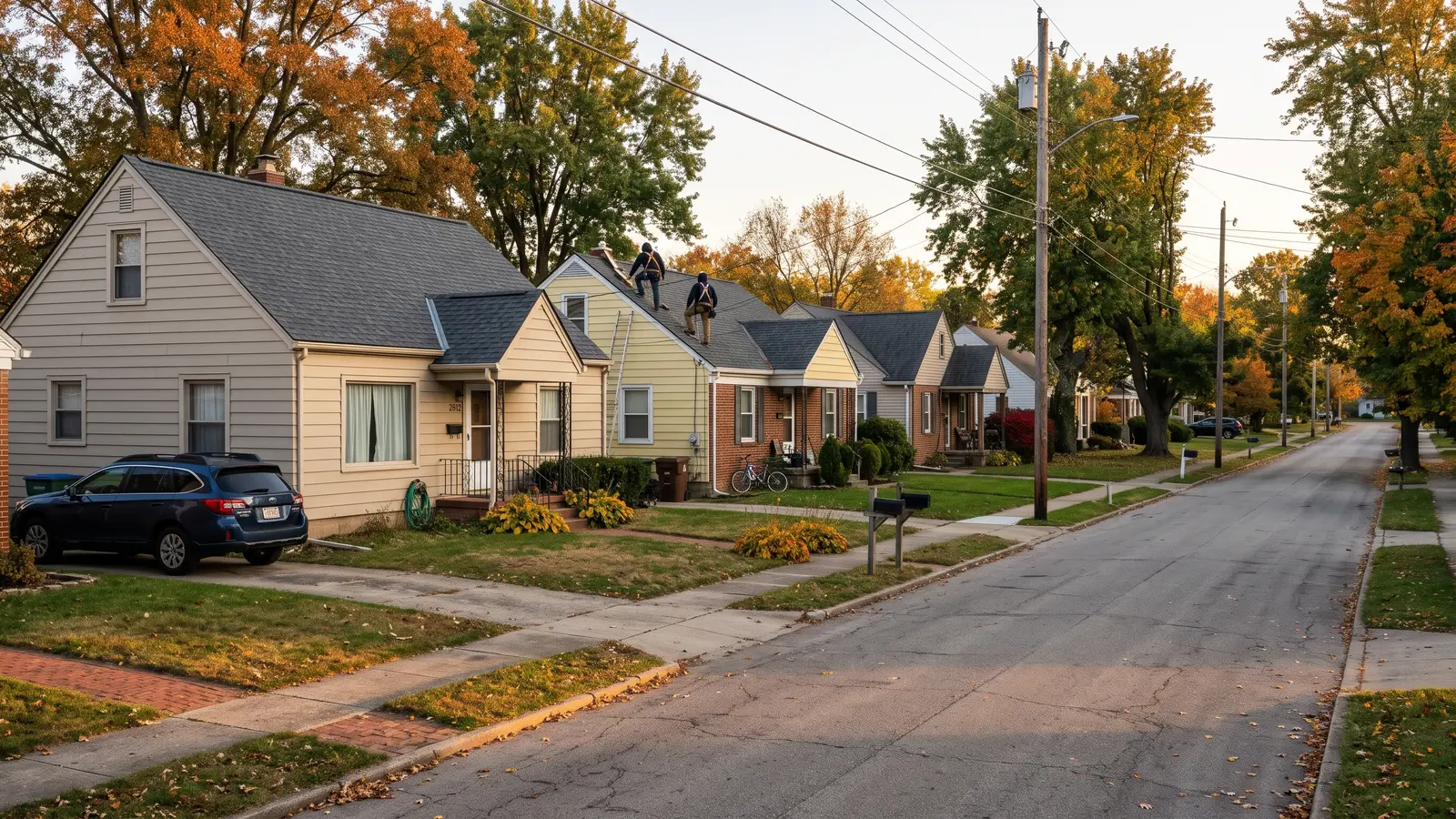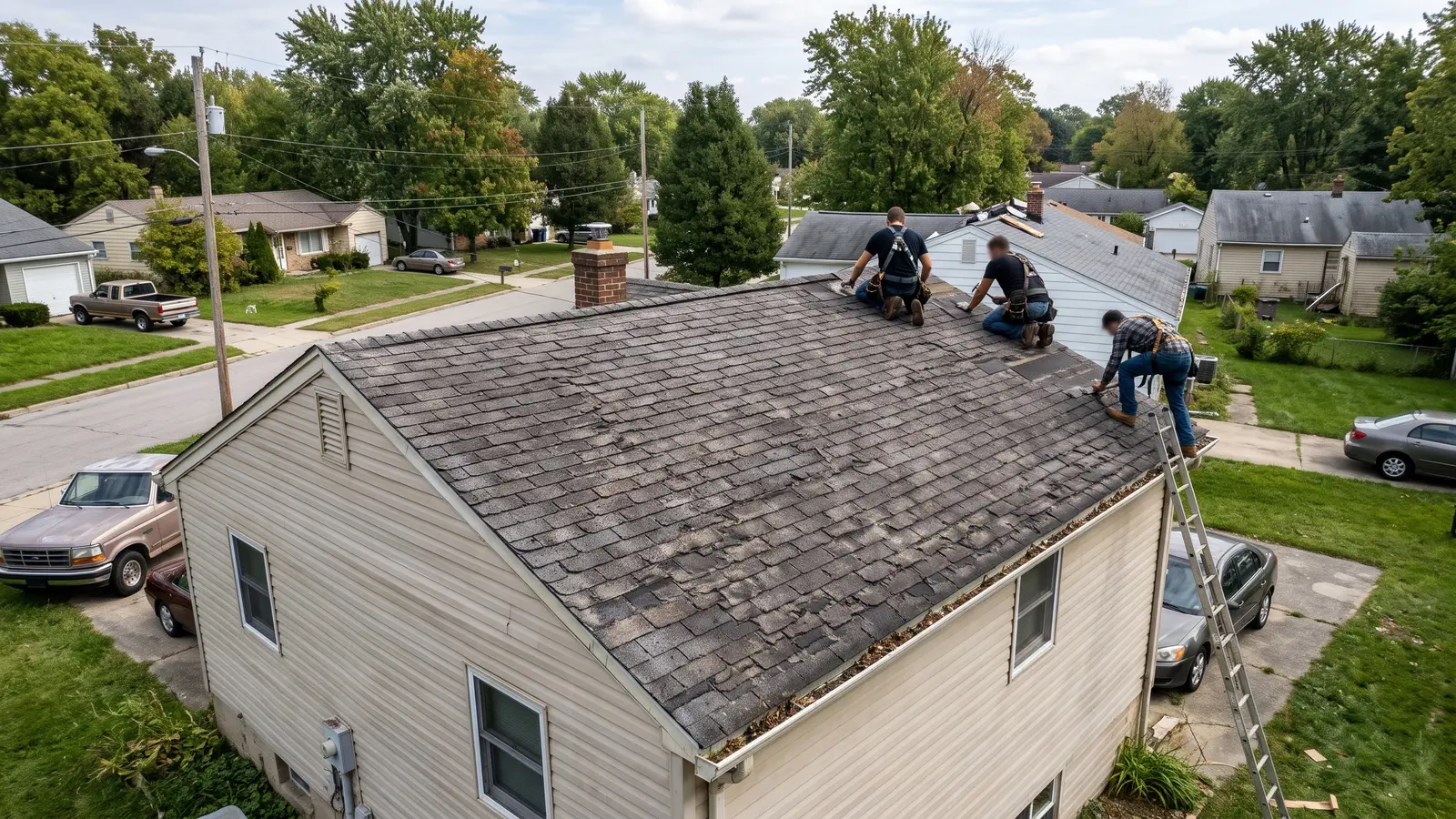
How long do roofs last by material?
Here’s what to realistically expect in northeast Indiana:
| Roof type | Typical lifespan | Notes |
|---|---|---|
| 3-tab asphalt shingles | 15–20 years | Thinner, flatter, more prone to wind lift |
| Architectural (dimensional) shingles | 20–30 years | The most common choice for Fort Wayne re-roofs |
| Metal (standing seam or metal shingles) | 40–70 years | Higher upfront cost, long service life |
| EPDM or TPO (flat/low-slope) | 15–30 years | Common on porches, additions and garages |
If you’re choosing between the first two, see architectural vs. 3-tab shingles. For a long-term view, compare metal roofs vs. shingles.
What shortens a roof’s life in Fort Wayne?
Poor attic ventilation. This is the quiet killer. A hot, unvented attic bakes shingles from below in summer, and warm, moist air in winter condenses on the deck and feeds ice dams. Balanced intake and exhaust ventilation can add years to a roof. More on attic ventilation.
Freeze-thaw cycles. Fort Wayne winters swing above and below freezing repeatedly. Water that gets under damaged shingles or flashing freezes, expands and works them loose.
Hail and wind. Hail knocks off protective granules and can bruise or crack shingles. Wind lifts tabs and breaks their seal. A roof that’s been through several storms ages faster even if it never leaked. See storm damage repair.
Ice dams. When snow melts on a warm roof and refreezes at the cold eaves, water backs up under shingles. Ice and water shield at the eaves helps, but ventilation and insulation fix the cause.
Installation shortcuts. Reused flashing, too few nails, missing ice barrier or a roof-over on top of old shingles all shorten life.
Shade and debris. Roofs under heavy tree cover stay damp, grow moss and collect debris in valleys.
Should a 20-year-old roof be replaced?
It depends on the roof, not just the number. A well-ventilated architectural shingle roof can still be sound at 20. A 3-tab roof at 20 is usually done. What tells you is condition:
- Curling, cupping or cracked shingles
- Bald spots and granules piling up in gutters
- Repeated leaks in different spots
- Soft or spongy spots when walked on (by a professional)
- Daylight or water stains in the attic
Our checklist of signs you need a new roof walks through each one.
How do Fort Wayne’s seasons wear a roof?
Each season in northeast Indiana takes a different toll:
| Season | What happens to your roof |
|---|---|
| Spring | Heavy rain tests flashing and valleys; wind storms lift shingle tabs |
| Summer | Hail storms knock off granules; attic temperatures bake shingles from below |
| Fall | Leaves clog gutters and valleys, so water backs up under the edges |
| Winter | Freeze-thaw cycles loosen damaged areas; ice dams push water under the eaves |
A roof with good ventilation, clean gutters and sound flashing handles all four. A roof missing any one of those ages faster than its rating suggests.
Does shingle color or brand change lifespan?
Darker shingles absorb more heat, but in a well-ventilated attic the difference in lifespan is small. Brand matters less than product line and installation. The major manufacturers all make good architectural shingles; what separates a 20-year roof from a 30-year roof is usually ventilation, nailing and flashing. If you’re weighing brands, see GAF vs. Owens Corning.
What about the parts that wear out before the shingles?
Some components often need attention before the field shingles do:
- Pipe boots. The rubber collars around plumbing vents crack in the sun and are a common leak source after 10 to 15 years.
- Sealant at flashing. Caulked joints at chimneys and walls dry out and need resealing.
- Ridge caps. They take the most wind and weather and can wear faster than the field.
- Gutters. Sagging or clogged gutters let water back up under the drip edge.
Catching these early is what a periodic inspection is for.
How can you make a roof last longer?
- Get it inspected every few years and after major storms. A roof inspection catches small flashing and sealant problems early.
- Keep gutters clear so water doesn’t back up under the drip edge.
- Fix ventilation and insulation if you’ve seen ice dams or a very hot attic.
- Repair storm damage promptly instead of letting it ride a season.
- Trim overhanging branches.
Is it worth replacing a roof before it fails?
Usually, yes, if it’s clearly near the end. Waiting for a leak means water has already reached the underlayment and often the deck, insulation or drywall. Replacing a roof that’s worn but still dry keeps the job to roofing alone: no ceiling repairs, no soaked insulation, and usually less rotted decking to replace at the per-sheet price.
Timing also matters. Roofing schedules in Fort Wayne fill up after big spring and summer storms, and shingles need mild weather to seal properly. Planning a replacement a season ahead gives you your pick of dates instead of a rushed job between storms.
Does a new roof add value to a home?
A new roof rarely adds its full cost to a sale price, but an old one can subtract from it. Buyers’ inspectors flag roofs near the end of their life, and that often turns into a negotiation or a required credit. Some insurers also look closely at roof age when writing or renewing a policy. A documented, permitted roof with a known install date is an easy box to check when you sell.
What should you write down after a new roof?
Keep the install date, the shingle product and color, the permit and final inspection, and photos from the job. That record makes future claims, warranty questions and resale simpler, and it tells the next inspector exactly how old the roof is instead of leaving them to guess.
How do you know when it’s time?
Age is a clue; condition is the answer. If your roof is past the middle of its expected life and you’ve seen leaks, curling or heavy granule loss, start budgeting. Our Fort Wayne roof replacement cost guide shows what to expect, and we’ll give you an honest read on repair versus replacement. Read roof repair vs. replacement or book a free inspection.