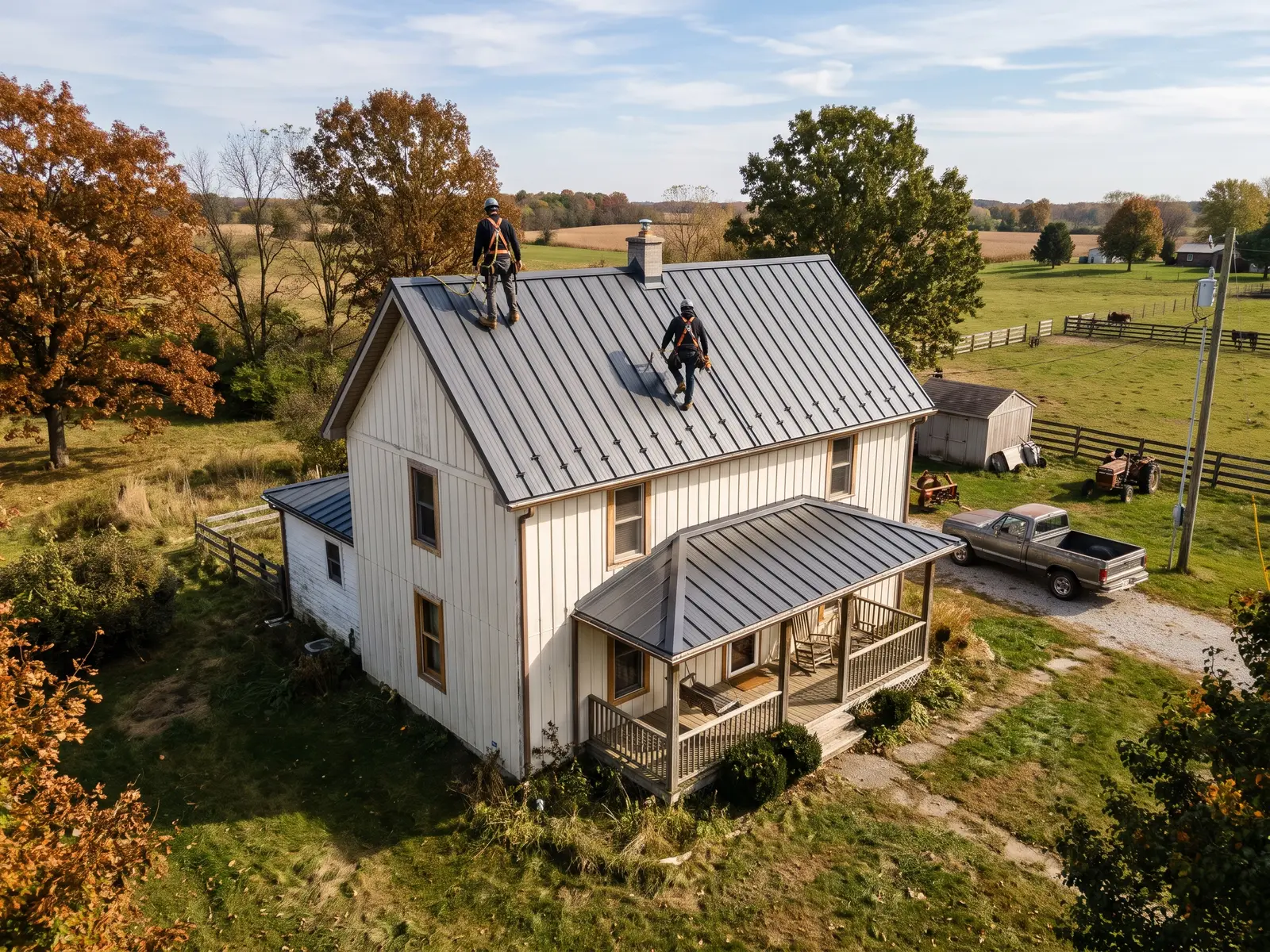
Metal Roofing in Fort Wayne
Metal roofing costs more up front than shingles, but it can last two or three times as long and shed snow and rain far better. We'll walk you through standing seam, exposed-fastener panels and metal shingles, what each really costs, and whether metal makes sense for your home.
- Standing seam, exposed-fastener and metal shingle options
- Honest comparison with shingles before you decide
- Itemized written quote
- Allen County permit pulled for you
Get a Free Quote
Fast. Easy. No obligation.
Quick answer
A metal roof in Fort Wayne typically costs $18,000 to $40,000 for an average home, roughly double architectural shingles. Standing seam sits at the top of that range, exposed-fastener panels at the bottom. Metal roofs commonly last 40 to 70 years, and most installs take two to four days with an Allen County permit we pull.
How much does a metal roof cost in Fort Wayne?
For an average Fort Wayne home, a metal roof usually runs $18,000 to $40,000. That's roughly twice what an architectural shingle roof costs, and the type of metal matters most:
| Type | Typical cost range | Notes |
|---|---|---|
| Exposed-fastener panels | Lower end | Screws through the panel face; washers need checking over time |
| Metal shingles | Middle | Look like shingles, slate or shake; interlocking |
| Standing seam | Upper end | Hidden fasteners, raised seams, the longest-lasting option |
Roof size, pitch, the number of valleys and penetrations, and whether the deck needs repair all move the price. For how metal stacks up over the life of the roof, read metal roof vs. shingles.
Standing seam, exposed-fastener or metal shingles?
Standing seam panels run from ridge to eave with raised, interlocking seams, and the fasteners are hidden under the panel. Nothing pokes through the roof surface, which is why it's the preferred choice for homes and the longest-lasting option.
Exposed-fastener panels (often called ag panel or screw-down metal) are fastened with screws through the face. They cost less and are common on barns and outbuildings around Allen County. The rubber washers on those screws age and need to be checked and replaced over the years.
Metal shingles are stamped to look like asphalt shingles, slate or wood shake. They suit homes in historic-feeling neighborhoods where a ribbed panel would look out of place.
Gauge is the thickness of the steel: a lower number is thicker. 24 gauge is stiffer and dents less than 26 gauge, and it's the better choice for standing seam on a home. 26 gauge is common for exposed-fastener panels.
What is the biggest problem with metal roofs?
Honestly, it's cost and installation quality. Metal costs more up front, and a metal roof is only as good as its installer. The most common issues we see:
- Exposed fasteners backing out or washers drying out, which lets water in around screws.
- Poor flashing at chimneys, walls and valleys. Metal moves as it heats and cools, and trim has to allow for it.
- Oil-canning, a visible waviness in flat panels. It's cosmetic, and panel profile and gauge choice reduce it.
- Dents from large hail. Metal generally doesn't leak from hail, but thinner panels can show dents.
On noise: a metal roof installed over solid decking and underlayment, with an insulated attic below, is not noticeably louder in the rain than shingles. The "loud tin roof" reputation comes from metal over open framing on barns.
Does homeowners insurance go down with a metal roof?
It can. Some insurers offer a discount for impact-resistant roofing, and certain metal panels carry an impact rating. Whether your policy changes depends on your insurer, so call them with the product name before you decide. Also ask how your policy handles cosmetic damage like hail dents on metal, since some policies exclude it.
After a storm, our storm and hail damage repair page explains how damage gets documented for a claim.
Is metal roofing worth it in Fort Wayne?
Metal makes the most sense if you plan to stay in your home a long time. A metal roof commonly lasts 40 to 70 years versus 20 to 30 for architectural shingles, so over decades it can cost less than replacing shingles twice. It sheds snow well, which helps with ice dams, and it holds up to the spring winds that tear shingles loose.
If you're likely to sell in the next five to ten years, a quality shingle roof usually returns more of its cost. Either way, a metal roof still needs a permit from the Allen County Building Department, which we pull for you, and Indiana's Home Improvement Contracts Act requires a written contract for the work. Our quote lists the panel type, gauge, underlayment, trim and flashing so you know exactly what you're buying.
Our process
How metal roofing works with us
- 1
Inspection and options
We measure the roof, check the deck and attic, and talk through panel types and colors.
- 2
Itemized quote
Panel type, gauge, underlayment, trim, flashing and permit, each on its own line.
- 3
Tear-off and install
Old roof removed, deck repaired, underlayment down, panels and trim installed over two to four days.
- 4
Cleanup and walk-around
Scrap and debris hauled away, yard swept, and a final look at every detail with you.
Compare your options
Costs & planning
Related services
Metal Roofing questions
How much does a metal roof cost in Fort Wayne?
Most homes run $18,000 to $40,000 depending on panel type, gauge, size and pitch. Standing seam is at the top of the range.
How much does a 2,000 sq ft metal roof cost?
A 2,000 square foot roof (20 squares) often lands in the $20,000–$32,000 range for metal, depending on the panel type and how complex the roof is. A written quote after an inspection is the only reliable number.
What is the biggest problem with metal roofs?
Up-front cost and installation quality. Exposed fasteners, poor flashing and thin panels cause most problems. A properly installed standing seam roof avoids the fastener issue entirely.
Are metal roofs loud in the rain?
Not when installed over solid decking with underlayment and an insulated attic. The loud reputation comes from metal over open framing on barns and sheds.
Is 24 or 26 gauge metal better?
24 gauge is thicker, stiffer and more dent-resistant, so it's the better choice for standing seam on a home. 26 gauge is common for exposed-fastener panels.
Does a metal roof lower insurance?
Sometimes. Some insurers discount impact-resistant roofing. Ask your insurer with the specific product name before deciding.
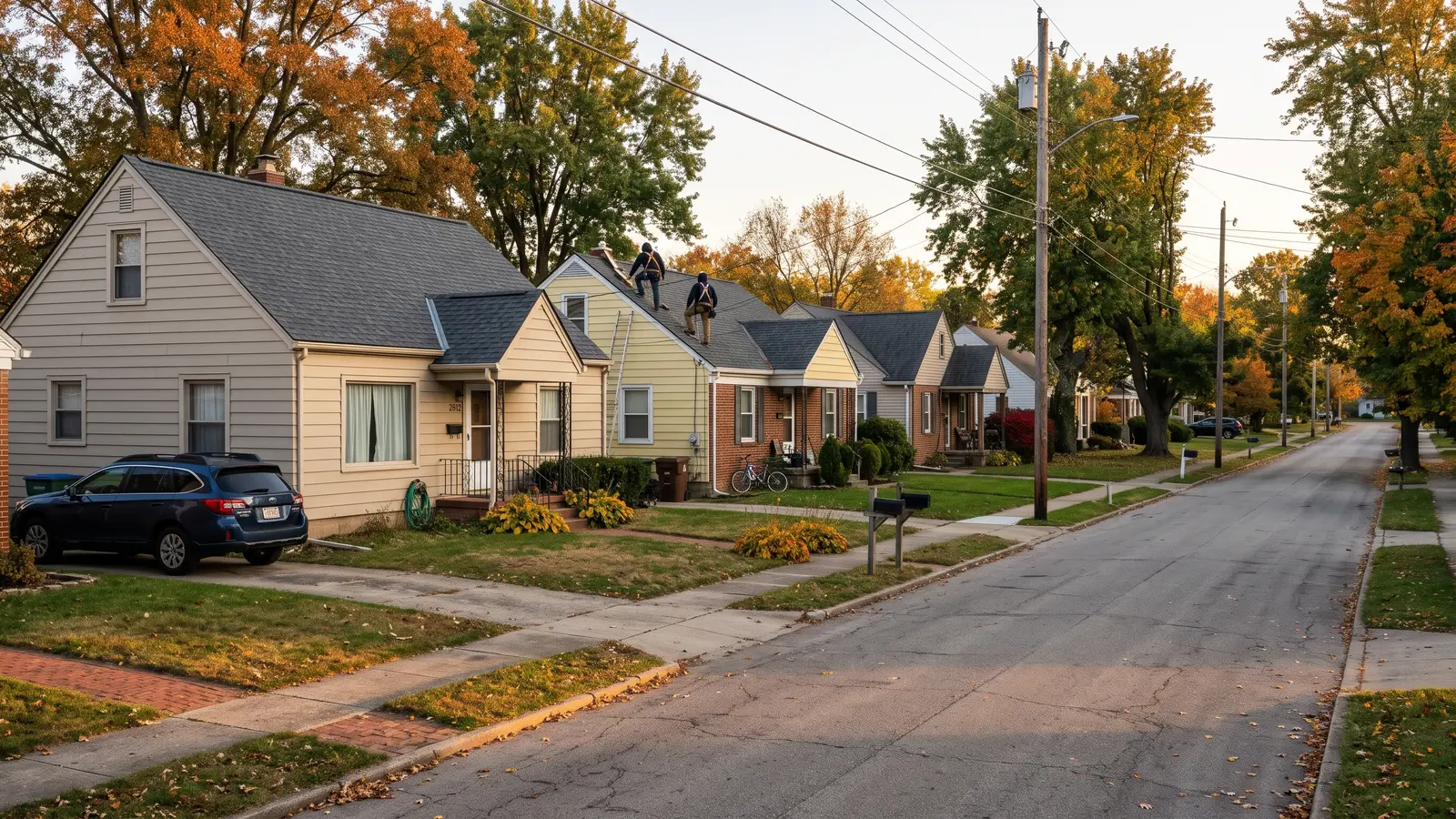
Don't Wait for the Next Storm.
A worn roof only gets more expensive once water reaches the deck and ceiling. Get a free inspection and a written quote.
- Calls answered 24/7
- Free, written estimates
- Fort Wayne & nearby