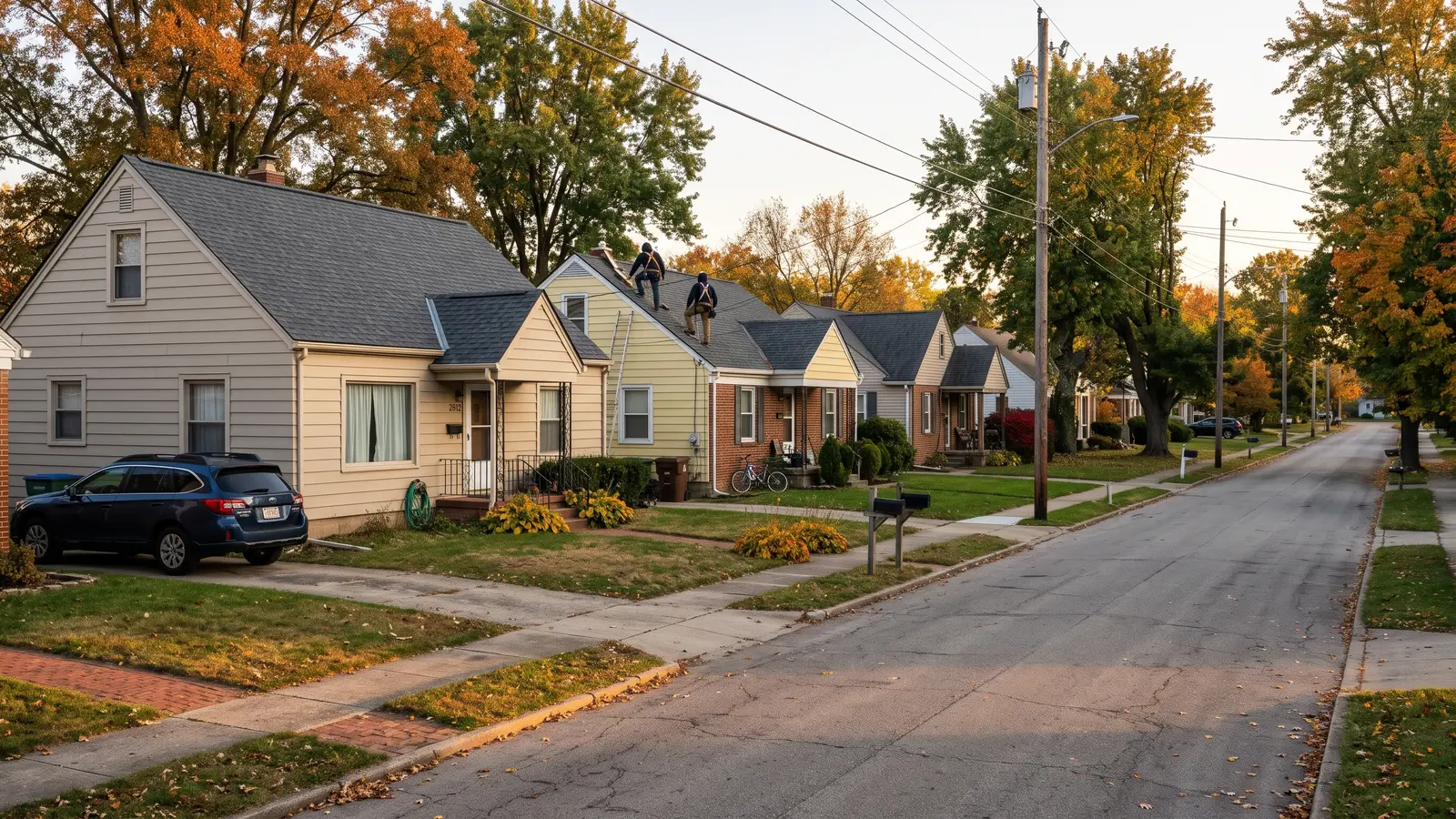
How can you tell if you need a new roof?
You don’t need to climb a ladder to spot most warning signs. Walk around the house with binoculars, look in your gutters, and take a flashlight into the attic. Here’s what to look for.
1. Are your shingles curling, cupping or cracked?
Shingle edges that curl up or centers that cup down are a sign the asphalt has dried out, often from age or a hot, poorly ventilated attic. Cracked shingles let water reach the underlayment. Widespread curling across a slope usually means replacement, not repair.
2. Are there granules in your gutters?
Shingles shed some granules when new, but heavy granule buildup in gutters and downspout splash areas on an older roof means the protective layer is wearing off. Bald, dark patches on the roof itself confirm it.
3. Are shingles missing?
A few blown-off shingles after a windstorm are a normal repair. Shingles missing from multiple areas, or that keep coming off after every storm, suggest the seal strips have failed across the roof.
4. Does the roofline sag?
A sagging ridge or dips between rafters can point to rotted decking or structural issues. That needs a professional look soon.
5. Can you see daylight in the attic?
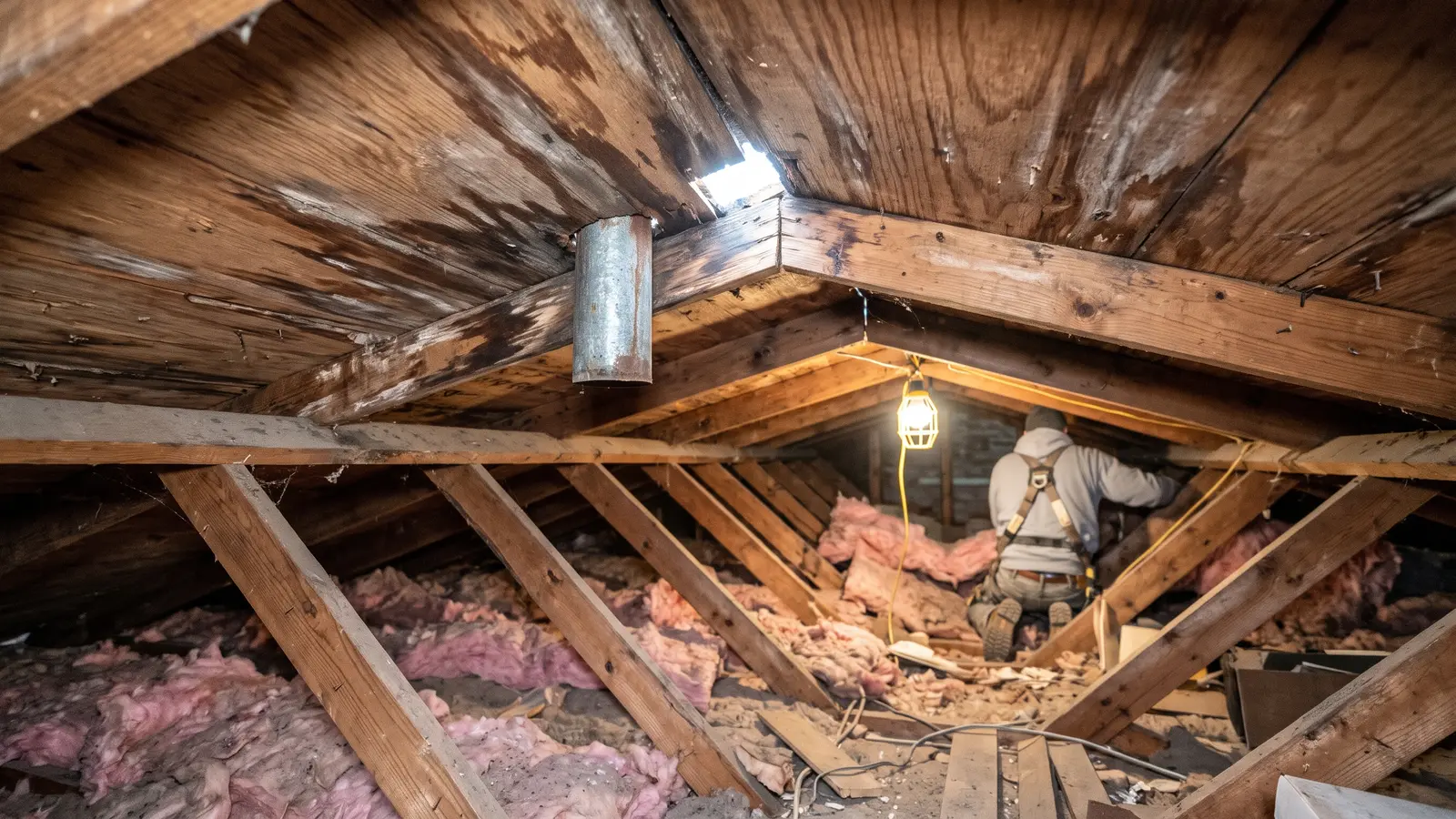
On a sunny day, turn off the attic light and look up. Pinpoints of daylight mean openings water can follow. Also look for dark stains, damp insulation, or mold on the underside of the deck.
6. Do you have leaks or ceiling stains?
One leak around a chimney or vent is often a flashing problem and very fixable. Repeated leaks in different places, or water stains that keep growing, usually mean the roof is failing more broadly.
7. Is there moss or algae?
Dark streaks are usually algae and mostly cosmetic. Thick moss, common on shaded north slopes in older Fort Wayne neighborhoods, holds moisture and lifts shingle edges.
8. Are there ice dams every winter?
Ice dams at the eaves mean heat is escaping into the attic and melting snow that refreezes at the cold edge. The water they push under shingles damages the deck and ceilings. The fix usually involves attic ventilation and insulation, not just the roof.
9. How old is the roof?
Use age as context:
| Roof type | Usually nearing replacement at |
|---|---|
| 3-tab shingles | 15–20 years |
| Architectural shingles | 20–30 years |
| Metal | 40+ years |
Details in how long a roof lasts in Fort Wayne.
What do these signs look like from the ground?
You can check a lot without climbing anything:
| What you see | What it may mean |
|---|---|
| Wavy or uneven roofline | Deck sag or rot, or a second layer installed over a warped first layer |
| Dark, bare patches | Granule loss from age or hail |
| Shingles at odd angles | Wind lifted them and broke the seal |
| Rust or gaps around the chimney | Flashing failing |
| Overflowing gutters in light rain | Clogged gutters or granules filling them |
| Peeling paint on soffits or fascia | Water getting behind the drip edge |
Use binoculars on a clear day, and look at every side of the house. The south and west slopes usually wear first because they get the most sun.
What should you check in the attic?
The attic tells you more than the outside does. With a flashlight, look for:
- Water stains on the underside of the decking or rafters, especially around chimneys, vents and valleys
- Damp or compressed insulation
- Mold or mildew, which points to poor ventilation as much as leaks
- Frost on nails in winter, a sign of warm, moist air condensing on the cold deck
- Very high summer heat, which bakes shingles from below
If you see frost or mold but no obvious leak, the problem may be attic ventilation rather than the roof covering itself.
Do these signs mean you need a new roof right now?
Not always. A single sign on a roof that’s otherwise young and healthy usually calls for a targeted fix. Several signs together on an older roof mean it’s time to plan. The goal is to replace a roof on your schedule, before water reaches the deck, insulation and ceilings and turns a roofing job into a bigger repair.
Should you repair or replace?
A rough rule of thumb:
- Repair if the roof is less than about halfway through its expected life, the damage is limited to one area, and the shingles elsewhere are flat and holding granules.
- Replace if you’re seeing several of the signs above at once, the roof is near the end of its life, or repair costs keep adding up.
We compare both honestly in roof repair vs. replacement.
What does it cost to wait?
A roof that’s showing its age doesn’t fail all at once, but the cost of waiting grows quietly. Once water gets past the shingles, it soaks the underlayment, then the deck, then the insulation and ceiling. Each step adds a trade to the repair bill: decking at a per-sheet price, insulation, drywall and paint. Our roof replacement cost guide shows what a planned replacement costs in Fort Wayne, which is almost always less than an emergency one after interior damage.
When is it urgent?
Call right away if you have an active leak, a sagging section, or a large area of missing shingles before rain is forecast. Temporary tarping protects the house until a permanent fix is scheduled. Everything else on this list is worth planning for, but these three can’t wait.
What if the damage came from a storm?
If hail or wind caused it, your homeowners insurance may cover repair or replacement. Get it documented promptly with a storm damage inspection and read our guide to hail damage claims.
What’s the next step?
If you’ve checked off more than one item, a professional roof inspection is the next step. We photograph every slope and the attic, tell you whether it’s a repair or a replacement, and give you a written price either way. Book your free inspection.