Is my hail or wind damage covered by insurance?
Most homeowners policies cover sudden damage from hail and wind. They don’t cover wear and tear, age or poor maintenance. The question an adjuster answers is whether a specific storm damaged your roof enough to need repair or replacement.
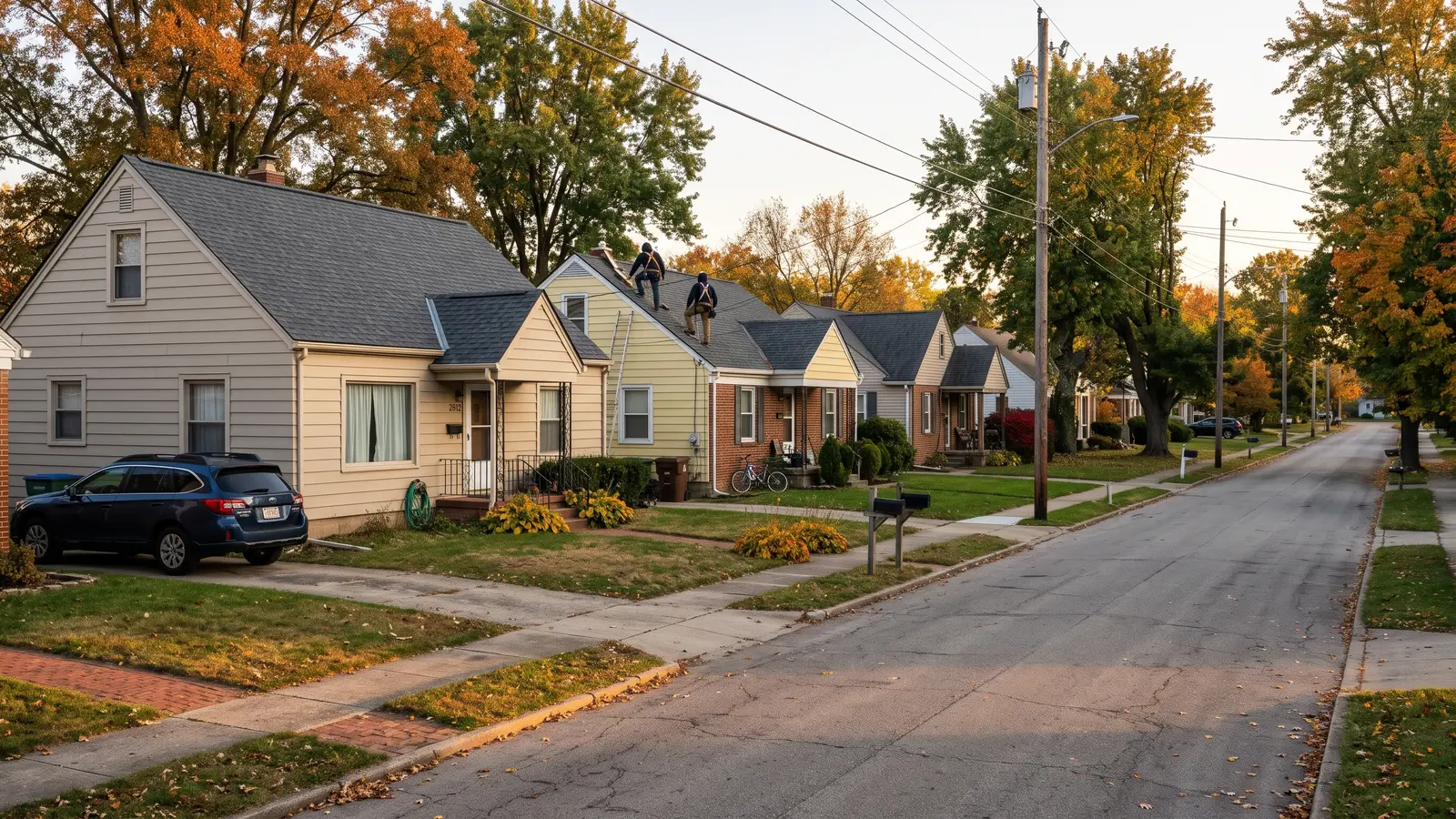
Northeast Indiana gets its share of spring and summer hail and strong wind, so it’s common for whole Fort Wayne neighborhoods to file after the same storm. This guide is general information, not legal or insurance advice; your policy wording is what counts.
What should you do right after a storm?
- Stay off the roof. Walk around the house and look for shingles in the yard, dented gutters and downspouts, and damaged window screens or siding.
- Check inside. Look for new ceiling stains or drips and check the attic if you can do it safely.
- Stop active leaks. Emergency tarping to prevent further damage is usually expected by insurers. Keep the receipt.
- Photograph everything with the date: shingles on the ground, dents in gutters and soft metals, interior water spots.
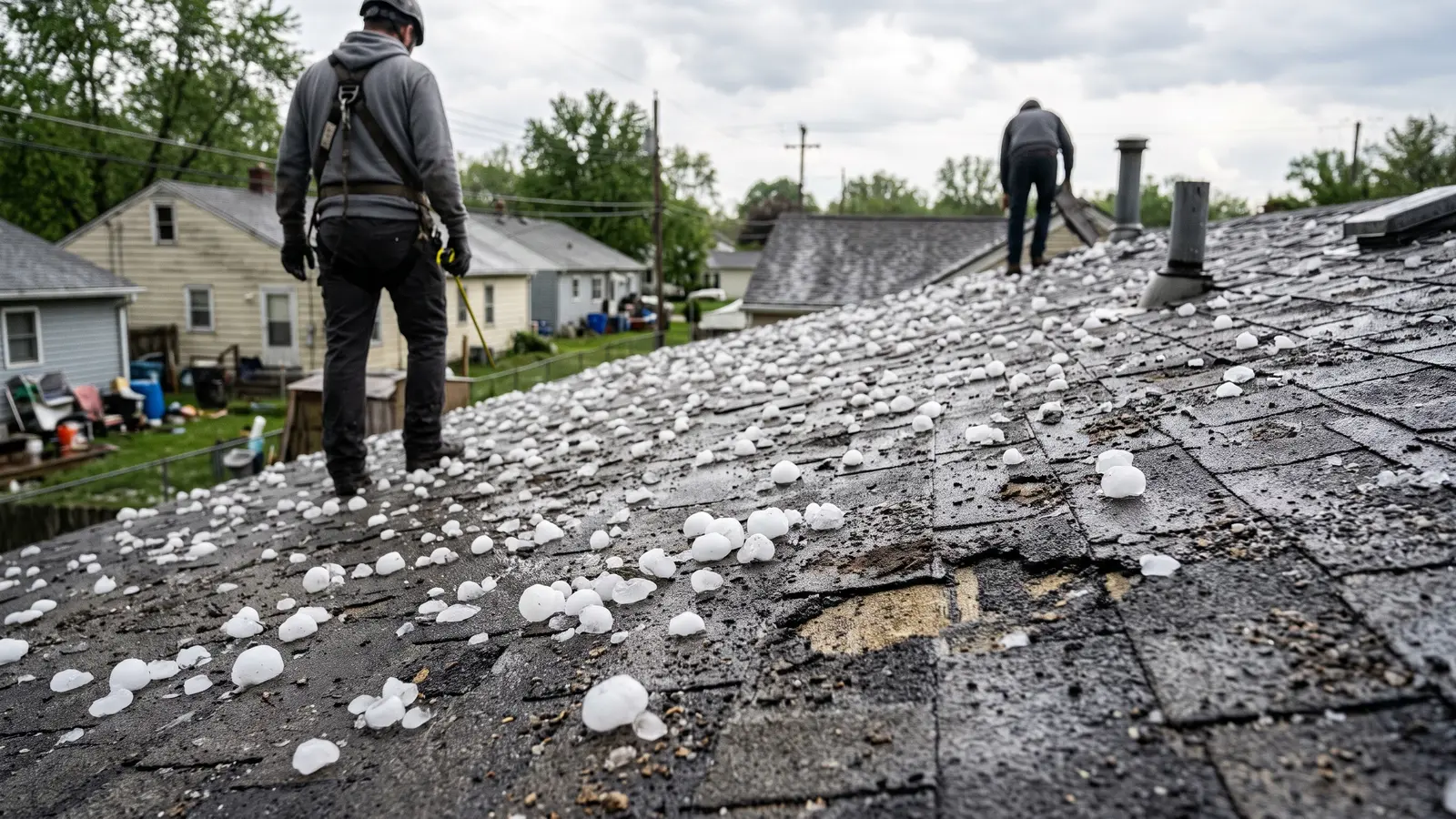
- Get a professional inspection. A roofer can document hail hits and wind lifting on each slope. Our storm damage inspections include labeled photos you can share with your insurer.
How do you file the claim?
Call your insurer or agent, or use their app, to open the claim. You’ll get a claim number and an adjuster will be assigned. Policies set time limits for reporting damage and for completing repairs, so check yours and don’t sit on it.
What happens at the adjuster inspection?
The adjuster inspects the roof, often marking test squares on each slope to count hail hits, and checks soft metals like vents and gutters. They write an estimate of covered repairs or replacement.
It helps to have your roofer present. A roofer can point out damage on slopes the adjuster might pass over quickly and can discuss items like flashing, ventilation and code-required underlayment.
What’s the difference between ACV and RCV?
| Policy type | How it pays |
|---|---|
| Replacement Cost Value (RCV) | Pays what it costs to replace the roof today, minus your deductible. Usually paid in two parts: an initial check, then the recoverable depreciation after the work is finished and invoiced. |
| Actual Cash Value (ACV) | Pays replacement cost minus depreciation for the roof’s age, minus your deductible. An older roof can pay out far less. |
Some policies also have a separate, higher wind and hail deductible, sometimes a percentage of your home’s insured value. Read the declarations page so you know your number before you file.
What is a supplement?
Sometimes the adjuster’s estimate misses items that turn up during the job, like rotted decking or code-required materials. Your contractor can submit a supplement, a documented request for the insurer to review those additional costs. Photos taken during tear-off support it.
How much will insurance pay?
With RCV coverage on a roof that clearly needs replacement, you’ll typically receive enough to replace it minus your deductible, split between the first check and the depreciation released after completion. With ACV, depreciation is gone for good. For a sense of what a replacement costs here, see our Fort Wayne roof cost guide.
How do you avoid storm chasers?
After a big hail storm, out-of-town crews often go door to door. Warning signs:
- Pressure to sign a contract or “authorization” on the spot
- Offers to waive or pay your deductible
- No local address or Allen County contractor license
- Asking you to sign over your insurance check before work is done
Never let a contractor waive, rebate or cover your deductible. It means the true cost is being misrepresented to your insurer, which can be insurance fraud, and it usually means corners get cut somewhere. Indiana also requires a written contract for home improvement work over $150; read ours before you sign. See our permit and licensing guide for what to ask any roofer.
How do you tell hail damage from normal wear?
Adjusters and roofers look for specific patterns. Hail damage usually shows as random, roughly circular marks where granules were knocked off, sometimes with a soft, bruised feel to the mat underneath. You’ll often see matching dents on metal vents, gutters, downspouts and window wraps. Normal wear looks different: granule loss concentrated on the sunniest slopes, blistering, and cracking along a pattern rather than scattered impacts.
Wind damage has its own signs: creased or torn tabs, shingles lifted and broken at the seal line, and pieces missing from the edges and ridges where wind gets underneath.
What if your claim is denied or underpaid?
Ask the insurer for the denial or estimate in writing, with the specific reasons. Then:
- Get a second opinion. A roofer’s documented inspection can show damage the adjuster missed.
- Request a re-inspection. Insurers will often send the adjuster back, or a different one, when you provide new photos.
- Check your policy’s appraisal clause. Many policies include a process for resolving disagreements over the amount of loss.
- Contact the Indiana Department of Insurance if you believe the claim isn’t being handled fairly.
For complicated disputes, a public adjuster or attorney may be worth a conversation, but understand their fees first.
Should you replace or repair after a storm?
If your insurer approves a full replacement, the decision is usually easy. If they approve only a repair, ask whether matching shingles are still available. When a repair can’t reasonably match, discuss it with your adjuster. Either way, the work should follow current code, including ice barrier at the eaves, which can matter on older Fort Wayne roofs that never had it. See roof repair vs. replacement.
Is it worth filing a claim?
If the damage is real and well above your deductible, usually yes; that’s what the coverage is for. If the repair cost is close to your deductible, a straight roof repair may make more sense than a claim on your record. A free inspection tells you which side of that line you’re on. Request one here.